Blog -> How Proper Ventilation Improves Workplace Productivity
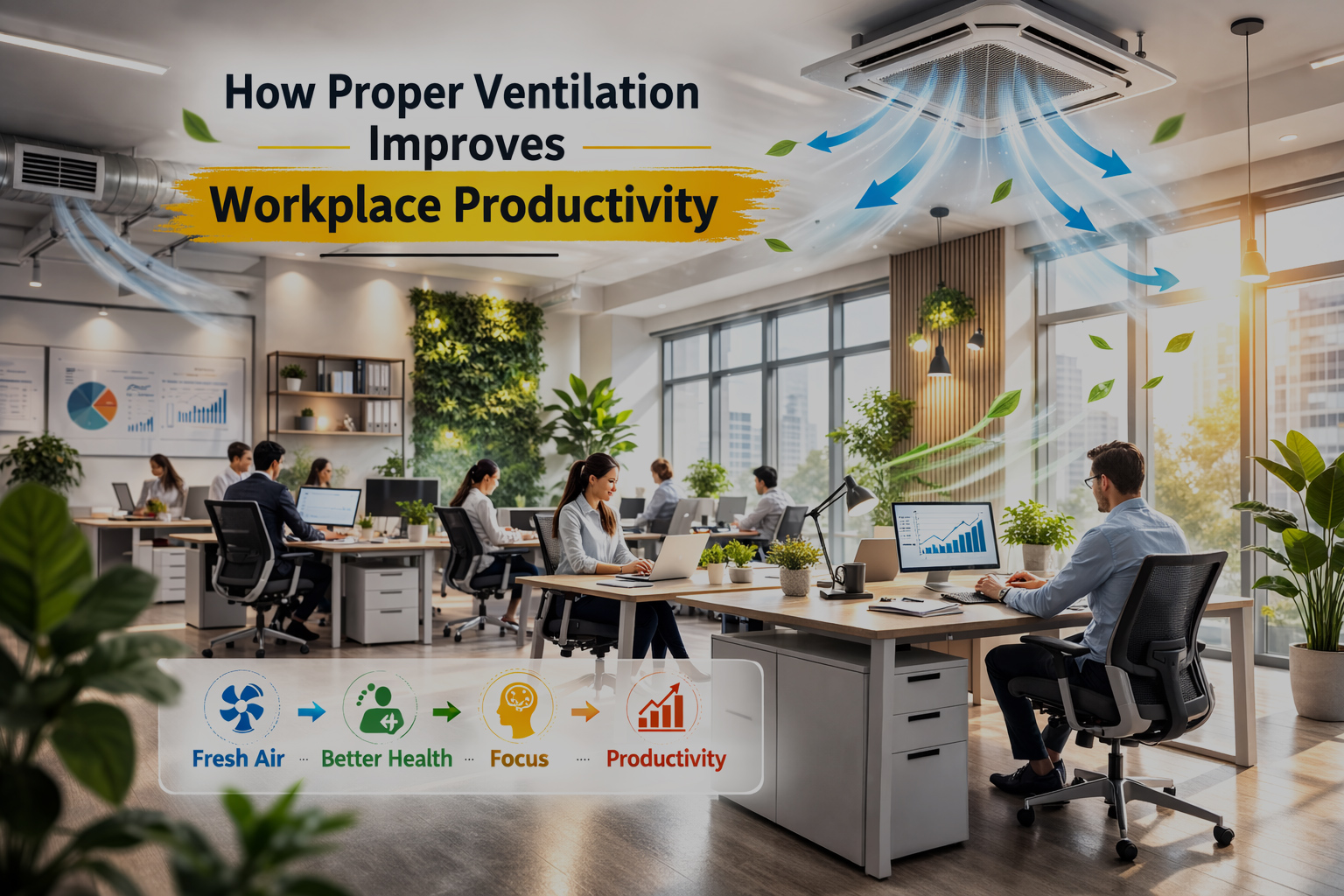
How Proper Ventilation Improves Workplace Productivity
In today’s competitive business environment, companies focus heavily on technology, management strategies, and employee engagement. However, one critical factor that is often overlooked is workplace ventilation. Proper ventilation does more than just circulate air — it directly impacts employee health, concentration, and overall productivity.
A well-ventilated workplace creates a comfortable, healthy, and performance-driven environment. Let’s explore how proper ventilation significantly improves workplace productivity.
1. Improves Indoor Air Quality (IAQ)
Indoor air quality plays a crucial role in employee well-being. Poor ventilation can lead to the accumulation of:
-
Carbon dioxide (CO?)
-
Dust and allergens
-
Chemical pollutants
-
Excess humidity
When fresh air circulation is inadequate, employees may experience headaches, fatigue, dizziness, and difficulty concentrating.
Proper ventilation systems remove stale air and replace it with fresh air, ensuring better oxygen levels. Improved air quality enhances mental clarity, reduces fatigue, and supports better decision-making.
2. Reduces Sick Leaves & Health Issues
Poor ventilation contributes to the spread of airborne viruses and bacteria. In closed office environments, inadequate air circulation increases the risk of:
-
Colds and flu
-
Respiratory infections
-
Allergic reactions
-
Sick Building Syndrome (SBS)
By installing proper HVAC and ventilation systems, workplaces can significantly reduce health-related absences. Fewer sick leaves mean consistent workflow and improved team performance.
Healthy employees are productive employees.
3. Enhances Focus and Cognitive Performance
Scientific studies show that high carbon dioxide levels reduce cognitive function. In poorly ventilated offices, CO? builds up quickly, leading to:
-
Slower thinking
-
Reduced problem-solving ability
-
Lower attention span
Good ventilation ensures balanced oxygen and CO? levels, which helps employees:
-
Think clearly
-
Make faster decisions
-
Stay alert for longer periods
Improved concentration leads to higher-quality output and fewer mistakes.
4. Maintains Comfortable Temperature Levels
Thermal comfort directly affects productivity. If the workplace is:
-
Too hot → Employees feel tired and irritable
-
Too cold → Employees feel distracted and uncomfortable
Modern ventilation systems integrated with HVAC technology maintain consistent temperature and humidity levels. A comfortable environment keeps employees focused on their tasks instead of being distracted by discomfort.
5. Boosts Employee Morale and Satisfaction
Employees value organizations that prioritize their well-being. A fresh, airy, and comfortable workspace creates a positive impression and boosts morale.
When employees feel physically comfortable, they are:
-
More engaged
-
Less stressed
-
More motivated
A productive workforce begins with a comfortable workplace.
6. Controls Odor and Humidity
In offices, factories, and commercial spaces, odors from equipment, chemicals, or overcrowding can accumulate. Excess humidity can also cause:
-
Mold growth
-
Unpleasant smell
-
Damage to equipment
Proper ventilation controls moisture and removes unwanted odors, maintaining a fresh working atmosphere.
This is particularly important in:
-
Manufacturing units
-
Hospitals
-
Warehouses
-
IT offices
-
Commercial complexes
7. Supports Energy Efficiency
Modern ventilation systems are designed to be energy-efficient. Smart ventilation:
-
Optimizes airflow
-
Reduces energy waste
-
Balances heating and cooling
Efficient HVAC systems reduce operational costs while maintaining ideal workplace conditions.
Lower energy costs + improved employee output = better business profitability.
8. Enhances Workplace Safety
In industrial and manufacturing environments, ventilation is essential for removing:
-
Toxic fumes
-
Industrial dust
-
Chemical vapors
Proper air circulation protects workers from hazardous exposure and ensures compliance with safety standards.
Safe workplaces prevent accidents, legal issues, and downtime.
Key Signs Your Workplace Needs Better Ventilation
If you notice the following, your ventilation system may need upgrading:
-
Employees frequently complain about headaches
-
Stuffy or stale air
-
Strong odors lingering
-
Excess condensation on windows
-
Uneven temperature distribution
Addressing these issues promptly can significantly improve productivity levels.
Choosing the Right Ventilation System
To maximize productivity benefits, businesses should invest in:
-
Fresh air ventilation systems
-
Air handling units (AHU)
-
Exhaust systems
-
Ductable HVAC systems
-
Smart air quality monitoring systems
Professional HVAC experts can design customized ventilation solutions based on workspace size, occupancy level, and operational requirements.
Conclusion
Proper ventilation is not just a facility management feature — it is a productivity investment. Clean air, balanced temperature, and healthy indoor conditions directly impact employee performance, morale, and overall business success.
Organizations that prioritize workplace ventilation experience:
? Fewer sick leaves
? Better focus & decision-making
? Higher employee satisfaction
? Improved operational efficiency
In modern business environments, comfort and productivity go hand in hand. Investing in proper ventilation systems is investing in your team’s success.